


Play Way to Class XII
Academics
Inquiry-based teaching, following the National Curriculum Framework — and the board results published in full.
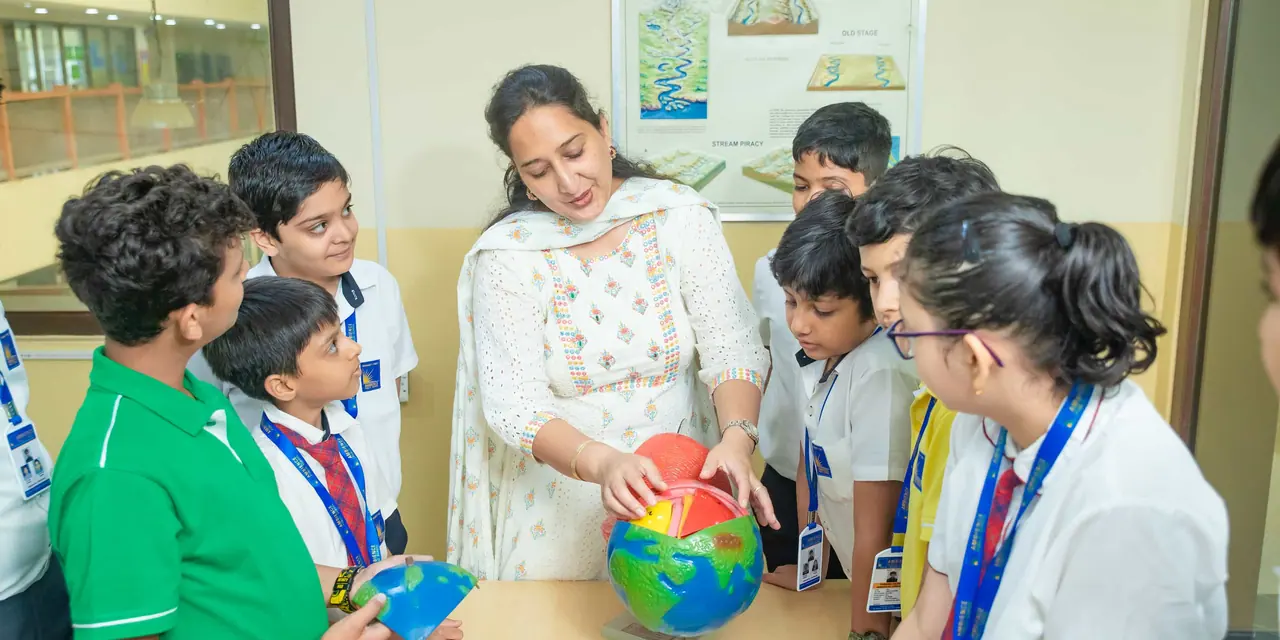
How we teach
Children who ask the questions.
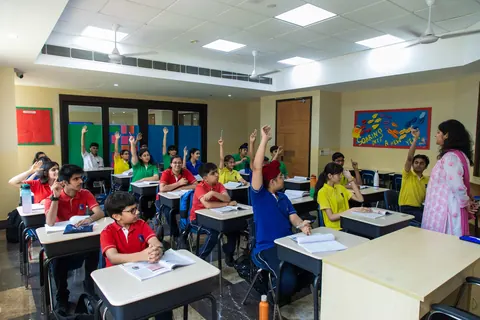
One of the main pedagogical strategy adopted by the Ambience Public school is the Inquiry-Based Learning model. Inquiry implies that students get involved and ask questions which leads to a better understanding. Our goal as teachers is to guide our students to find answers to our questions and encourage them to ask more questions while doing so. Students are actively involved in the classroom and develop problem-solving skills. This approach works extremely well in a collaborative environment.
Struggling students who do not do well in a teacher-led classroom respond well to an inquiry-based learning environment. It also helps builds confidence and self-esteem.
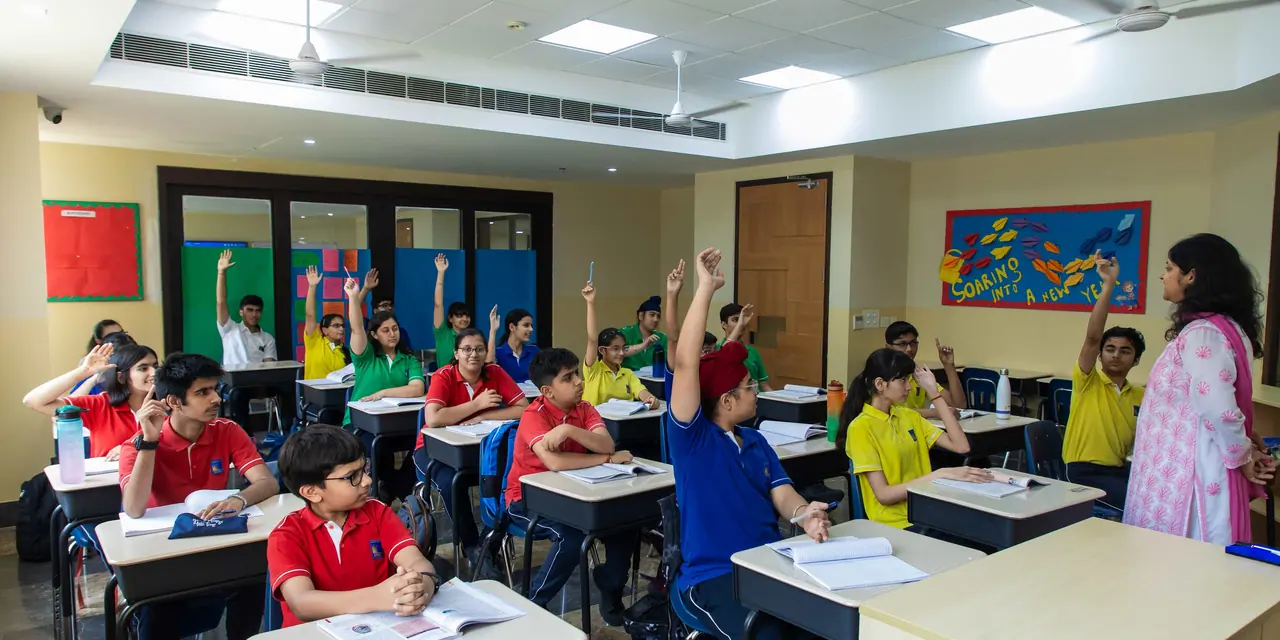
Tell me and I forget. Teach me and I remember. Involve me and I learn
Benjamin Franklin
The 5 E model
Five steps, in this order, in every lesson plan.
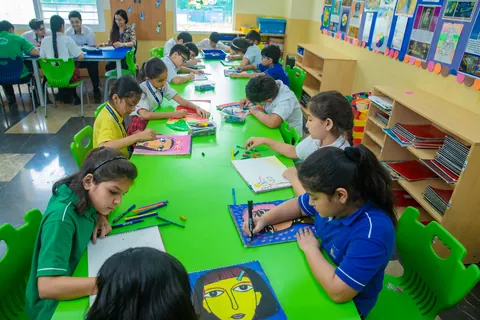
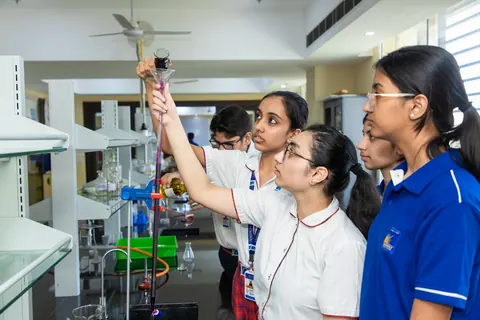
The 5 E Model supports the inquiry-based model. It allows children to make discoveries and to process new skills in an engaging way. The role of the teacher is to facilitate and support students as they use prior knowledge to build new knowledge. The 5 Es are Engage, Explore, Explain, Elaborate, and Evaluate. When planning a lesson, the teachers make sure that each of these areas is taken into consideration.
Engage
The lesson opens on something worth asking about.
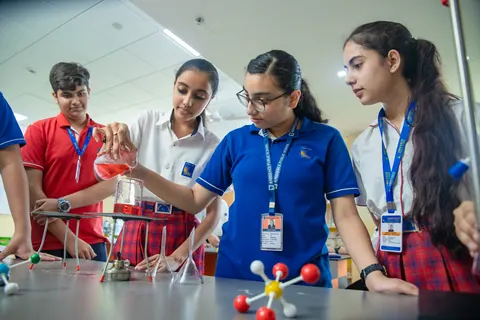
Explore
The class works at it first, before anyone is told the answer.
Explain
The teacher draws the thinking together and names it.
Elaborate
The idea is taken somewhere new and tested.
Evaluate
What each child now understands is recorded.
The stages
From two years old to Class XII.
Four stages, each with its own way of working — and one idea running through all of them.
Early Years Program
Ages 2+ to 5+
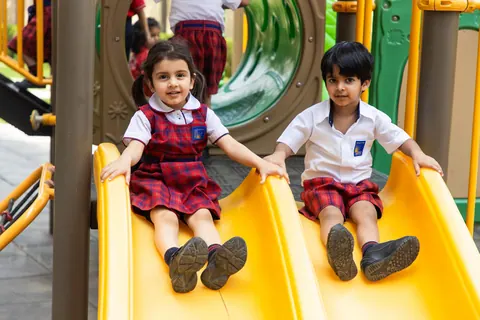
The Early Years program at Ambience School is for children from ages 2+ to 5+. During these years, children attend Pre-Nursery, Nursery and…
Primary School
The Primary School program bridges the Kindergarten and primary school years for a smooth transition, engaging students in an enriching and…
Middle School
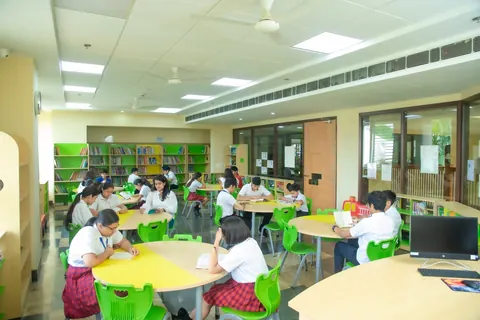
Grades VI-VIII, is a transition to a more structured space. Students discover their interests in an encouraging, cooperative, and caring environment…
Senior School
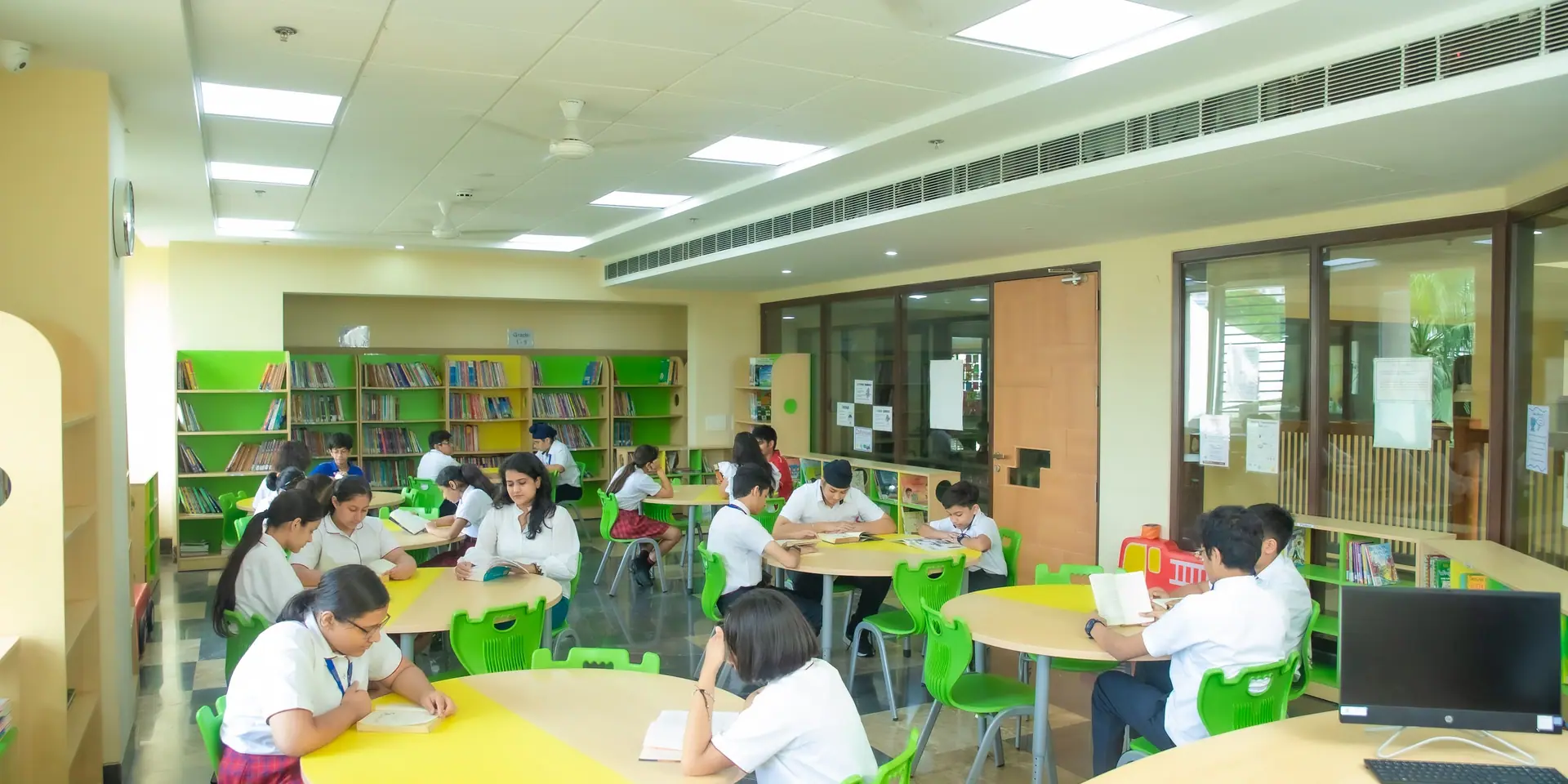
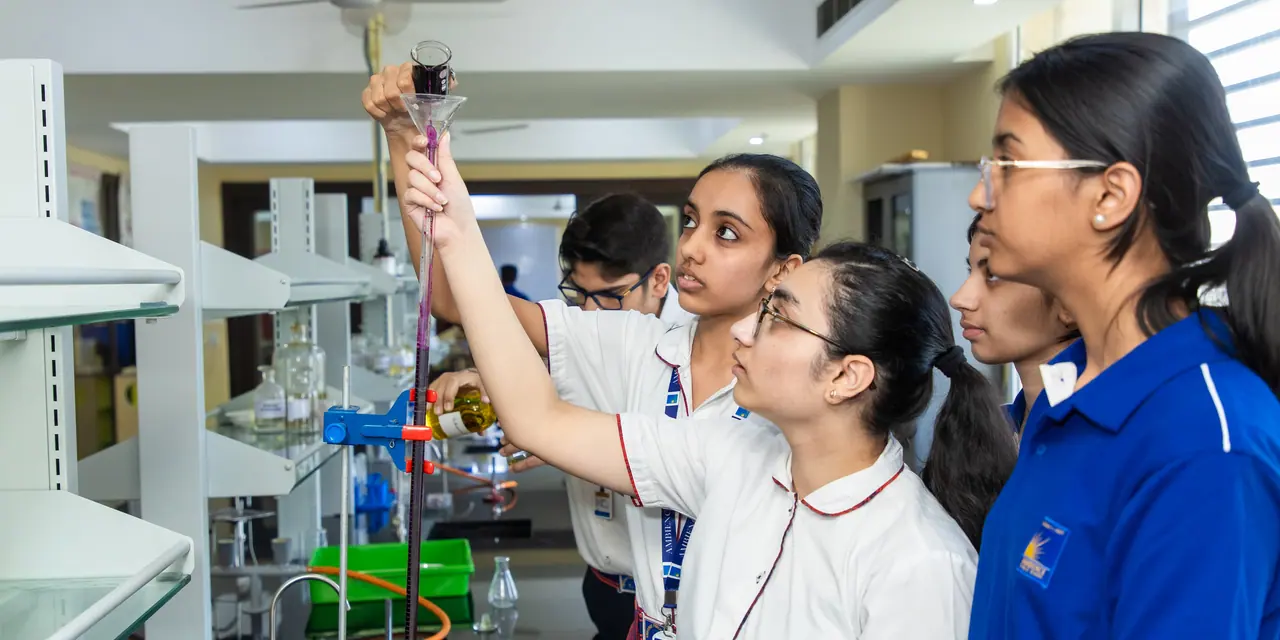
The Secondary School Programme is a structured curriculum designed to offer real life experiences and foundation for higher studies. The curriculum…
Assessment
Measured for improvement, not for ranking.
At Ambience School, the key element to assessments is ‘improvement’, an ongoing comprehensive evaluation process woven through the academic year of the school. Formative and summative assessments are used to these ends towards children’s development and learning.
Assessments are used to gather critical information about the student‘s development and growth. For each subject, the development of subject-specific skills is observed, assessed, measured, and reported using a rubric based system. It is a continuous process done in tandem with written assessments. Besides scholastic areas other developmental areas are co-scholastic and life skill development.
The evaluation of a student at the school happens through both formative (FA) and summative assessment (SA) process.
Board results
Every result the school has published.
A young school: the first Class XII batch sat the board in 2024–25.
Class XII
| Session | Registered | Passed | Pass rate | Note |
|---|---|---|---|---|
| 2025-2026 | 19 | 19 | 100% | |
| 2024-2025 | 8 | 8 | 100% |
The school records no Class XII board candidates in 2023-2024.
Class X
| Session | Registered | Passed | Pass rate | Note |
|---|---|---|---|---|
| 2025-2026 | 31 | 31 | 100% | |
| 2024-2025 | 11 | 11 | 100% | |
| 2023-2024 | 5 | 5 | 100% |
Board results ARE published, on the Mandatory Public Disclosure page “Last Three Year Result of the Board Examination” (https://ambienceschool.com/last-three-year-result-of-the-board-examination/, last modified 2026-05-15T04:05:50). Figures copied verbatim, including the source’s misspelled column header “REAMRKS”. Class XII for 2023-2024 is published as “Not Applicable” and 2024-2025 is marked “1st Batch”, i.e. the school’s first Class XII cohort graduated in 2024-2025.
Admissions 2026–27
Ask about a place in your child's class.
The admissions office will take you round the campus, answer your questions and tell you exactly what the next step is.
Admissions 2026–27
Start with a conversation.
Tell us about your child. The admissions office replies with the dates, criteria and documents for the class you are applying to — usually the same working day.